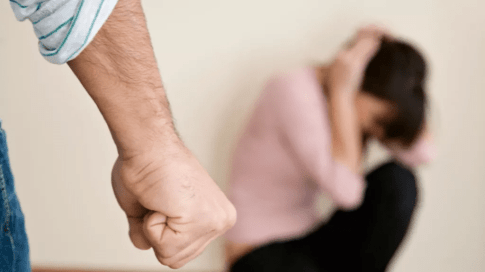
It is evident that domestic violence can cause mental health issues for the victims. In today’s blog, I will briefly talk about the Mental Health impacts Domestic Violence has on the victims. In future blogs, I will explore more into different aspects of Mental Health and Domestic Violence.
Domestic Violence is a form of abuse (important to note, it is not just physical, but can be emotional, sexual, verbal, spiritual, financial, and social) and it is most commonly between any individual who is currently or have previously been in an intimate relationship. (White Ribbon Australia, 2019). Mental Health and Mental illness can be easily confused – Mental Health is the ability to handle stress and day to day tasks, e.g. looking after your wellbeing. Mental Illness, however, is a psychological condition that can affect one’s mood, behavior and their way of thinking, for example, domestic violence victims usually exhibit signs of – depression, anxiety, and Post Traumatic Stress Disorder.
According to the Australian Institute of Health and Welfare, 25% of women have experienced emotional abuse by a current or former partner, in addition, 1 in 6 women have suffered from physical or sexual violence.
Often, the victim will feel helpless, shameful and that it is their fault. The culprit usually makes them feel this way and shifts the blame. Usually, after an eruption of anger and violence, the perpetrator then goes into a repetitive cycle of giving out acts of kindness, apologizing and making it seem to the victim, that this will be the last time that it happens. (Astbury et al, 2000).
In an Australian study to see the links between depression and abuse by partners of women – it was found that women who have suffered some form of abuse from partners or ex-partners were more likely to be depressed. (Hegarty et al, BMJ,2014). Additionally, women who have suffered physical abuse/violence cope in ways such as drinking alcohol, drug use, smoking, overeating – victims do this in order to forget and cope.
Attached is a TED talk video of a woman named Emma Murphy. Emma was a victim of Domestic Violence. In 2015, she posted a video of herself, with a swollen & bruised eye, talking about the incident that encouraged her to walk away, how it made her feel and the vulnerable feelings that come with such a traumatic experience. As an individual who has never experienced such trauma, watching this video helped me get insight into how the victims truly feel during and after incidents. Emma had 2 kids with her perpetrator and was still courageous enough to walk away for a better future for her and her children, Emma has helped inspire millions of people around the world when her video went viral.
source: Youtube
I hope that this blog gave everyone an insight into how trauma and abuse can affect an individual, especially when it comes to Domestic Violence. I am really looking forward to sharing with everyone the rest of my blog posts which are: exploring the age-old question of why the victim doesn’t leave the relationship, then going into Battered Woman Syndrome, and finally exploring the impacts domestic violence has on children.
References
American Psychiatric Association (2018), What Is Mental Illness?, online
https://www.psychiatry.org/patients-families/what-is-mental-illness, viewed 02/04/2019
Astbury J, Atkinson J, Duke J,E., Easteal P,L., Kurrle S,E., Tait P,R., and Turner J, Med J Aust 2000, The Impact of Domestic Violence on Individuals, 173 (8): 427-431, online, https://www.mja.com.au/journal/2000/173/8/impact-domestic-violence-individuals, viewed 02/04/2019
Australian Institute of Health and Welfare 2018, Domestic Violence, online, https://www.aihw.gov.au/reports-data/behaviours-risk-factors/domestic-violence/overview, viewed 02//04/2019
BMJ 2004, Association Between Depression and Abuse By Partners of Women Attending General Practice: Descriptive, Cross-Sectional Survey, online, https://www.bmj.com/content/328/7440/621.long, viewed 02/04/2019
White Ribbon Australia 2019, Domestic Violence Definition, online, https://www.whiteribbon.org.au/understand-domestic-violence/what-is-domestic-violence/domestic-violence-definition/, viewed 02/04/2019
World Health Organization (2014), Mental Health: A State Of Well-being, online
https://www.who.int/features/factfiles/mental_health/en/ , viewed 02/04/2019
Youtube 2018, I broke my silence: my story of Domestic Violence | Emma Murphy | TEDXUniversityofNicosa, video, https://www.youtube.com/watch?v=frFEdN7aMh8 viewed 02/04/2019
 Faye's Blog
That was a great and insightful video that shows the power that social media in helping victims of domestic violence overcome the mental challenges they’re faced with, although of course it can’t “cure” them of these issues. It along with other social programs are a great way to help victims of domestic violence cope with their trauma without them resorting to more damaging coping methods such as alcohol or god forbid suicide. It especially helps with respect to self-blame when hearing support from others who reassure you that is in-fact not your fault which helps victims not internalise the issues they face. This all shows how important social attitudes are towards helping victims of domestic violence come forward and seek help, I had found in my research (from the Human Rights Council, 2017, Report of the Special Rapporteur on violence against women, its causes and consequences, on her mission to Israel) that Bedouin women in Israel viewed domestic violence as just a natural occurrence under god as well were distrusting of the police (who often ignored complaints from women who did come forward) hence less women came out and rates of domestic violence were higher than both the Australian average and Israeli average.
LikeLike